The SYNGAM project
Understanding syngameons. Phylogenomics of the third richest Iberian plant genus in endemic species (Armeria, Plumbaginaceae)
Natural hybridization is now widely recognized as a common phenomenon throughout the living world, occurring along a range of scenarios and leading to a variety of consequences. Some of these are evolutionarily relevant, facilitating adaptation or triggering speciation.
The questions are: (1) What percentage of these frequent events have consequences for the two species that hybridize, or rather, their lineages? (2) What extrinsic and intrinsic factors determine whether hybridization will have consequences or just be an ephemeral phenomenon? Little is known about the genomic landscape of introgression, a consequence of hybridization that transfers genes through backcrossing. Also, the ecological and genomic aspects of adaptive introgression and their interplay are poorly understood except for a few model species.
A syngameon is a multispecies interbreeding network, i.e. a group of otherwise distinct species linked by limited gene exchange. The value of this concept for understanding the diversity of some trees, such as oaks, pines or eucalyptus, has only been recognized in recent years, although the term was coined a century ago. Syngameons represent suitable frameworks to study the diverse consequences of hybridization and the benefits of its members.
Project PID2024-162676NB-I00 financed by MICIU/AEI/10.13039/501100011033/ FEDER, UE
Armeria is a diploid plant genus of mostly Mediterranean perennial herbs, ranking third among those with the largest number of endemic species in the Iberian Peninsula, which is its main center of diversity. Available evidence indicate that Armeria is a syngameon. To produce insight on hybridization and introgression from such a suitable system, we need a solid evolutionary framework, which is not yet available since previous phylogenetic studies were based on a few genes that cannot retrieve the different signals contained in genomes, especially in hybridized genomes such as that of Armeria.
The main goal of this project is to build an evolutionary framework for Armeria. We will use a targeted, high-throughput sequencing approach with a custom-designed bait kit combined with genome skimming (HybSeq), so as to generate enough nuclear and plastid data to unravel its reticulated evolutionary history.
The secondary objectives address two intriguing questions: (1) Is the A. maritima group —a widespread species with a panboreal bipolar range— a counterexample to the evolution of the rest of the Armeria syngameon? (2) Has the Andalusian A. villosa group diversified into different niches through adaptive introgression, in accordance with the classic compilospecies concept? The benefits of this project are multiple. It will allow and encourage studies by multiple research teams on this interesting system, thanks not only to the evolutionary framework, but also to the specific bait kit we will design. It will also contribute to our understanding of syngameons, where interestingly, the roles of the species members clearly differ
 | Gonzalo Nieto Feliner Principal Investigator Research Professor, Real Jardín Botánico, CSIC Webpage - Google scholar |
 | Rosalía Piñeiro Portela Principal Investigator Associate Professor, University of A Coruña (UdC) Google scholar |
 | Miguel Serrano Pérez Investigator Assistant Professor, University of Santiago de Compostela (USC) Google scholar - Orcid |
 | Alex Baumel Collaborator Associate professor, Aix-Marseille University Mediterranean Institute of Biodiversity and Ecology (IMBE) Google scholar - Orcid |
 | Alex Twyford Collaborator Senior Lecturer in Botany, University of Edinburgh Research Associate at the Royal Botanic Garden Edinburgh Google scholar - Orcid |
 | Frédéric Médail Collaborator Professor in Ecology and Biogeography, Aix-Marseille University Mediterranean Institute of Biodiversity and Ecology (IMBE) Google scholar - Orcid |
 | Manuel Tiburtini Collaborator Postdoctoral Researcher, University of Pisa Google scholar - Orcid |
 | Yeter Yeşil Collaborator Associate professor, Istanbul University Google scholar - Orcid |
 | Alexey P. Seregin Collaborator Leading Research Fellow at the Department of Ecology and Plant Geography, Moscow State University Chief Curator of the Moscow University Herbarium (MW) Google scholar - Orcid |
 | Mónica García-Gallo Pinto R & D Technician Molecular Systematics Laboratory, Real Jardín Botánico, CSIC |
October 5, 2026
The sampling is almost complete

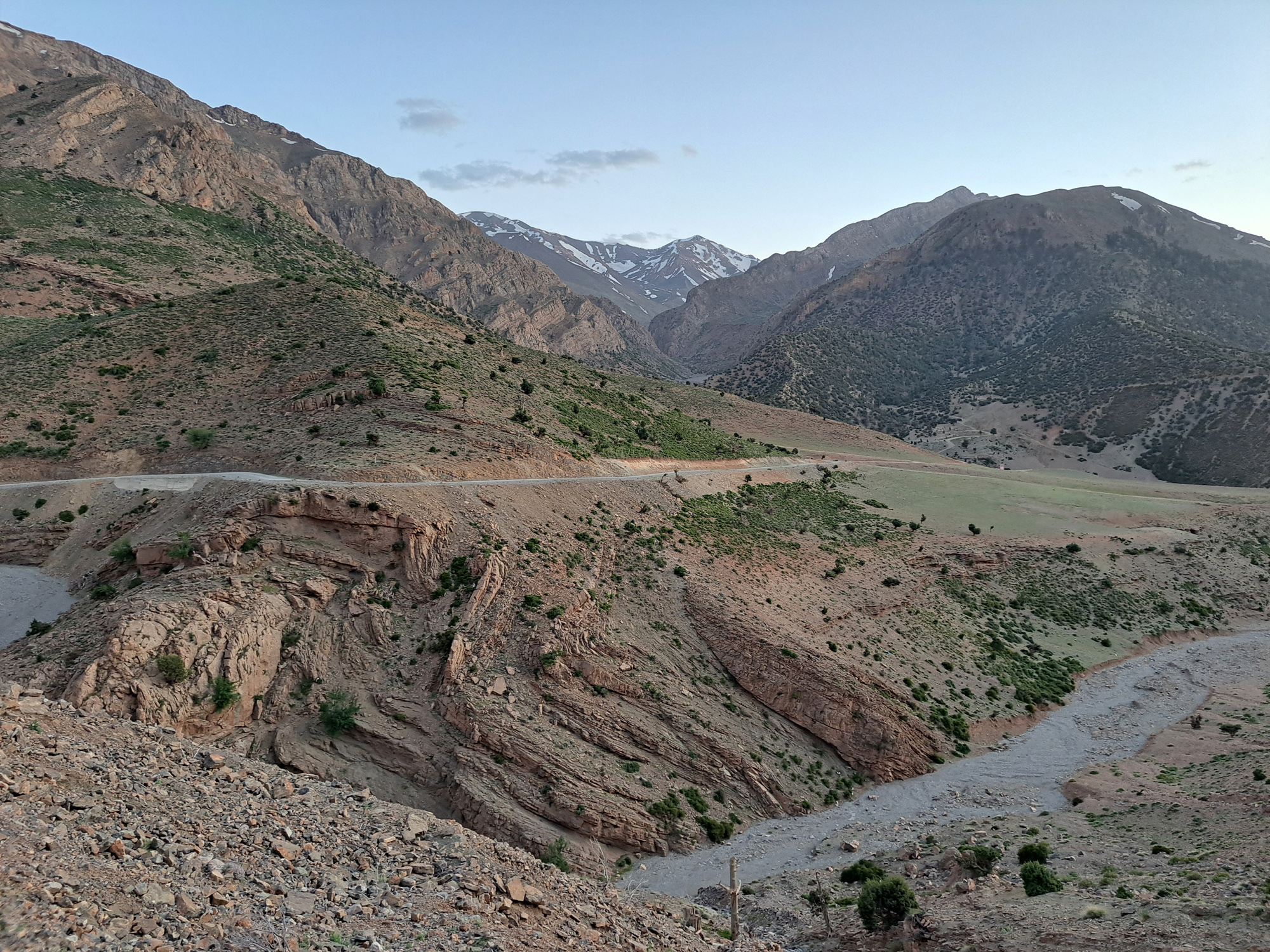
The team has engaged in obtaining Armeria leaf samples throughout the genus's range, in regions such as the Moroccan Anti-Atlas, Italian Campania, the Alps or western Algeria. However, a larger part of the sampling was focused on the Iberian Peninsula, which is the main centre of diversity for this genus. Across the range, numerous friends and colleagues provided us with invaluable support in various ways, such as supplying samples, detailed population coordinates, or guiding us to the sites.
Image gallery:
August 12, 2026
Collaboration with PHYLOPYR and PHYLOFLORA-PYR

Phylopyr is an initiative to sequence plants in the Pyrenees that supports the PHYLOFLORA-PYR project, which aims to create the first unified online identification key for the Pyrenean flora. Both projects are deeply entwined with the JACA Herbarium (IPE-CSIC).
We are very grateful to PHYLOPYR and PHYLOFLORA-PYR for agreeing to provide us with samples and/or DNA from species in the Pyrenees and surrounding areas.
https://sites.google.com/aranzadi.eus/phylopyr
https://phyloflora.csic.es/
May 5, 2026
Our team welcomes a new predoctoral researcher

Adelaida Márquez, MSc, has joined our research team in this capacity. Her position is funded by the AEI/MCIN through the Predoctoral Contracts Associated with PID2024 Projects programme (formerly FPIs). Adelaida will be conducting research on several aspects of the SYNGAM project, initially focusing on the bioinformatics design of the custom bait kit for Armeria.
January 22, 2026
The SYNGAM project presented at the 10th SESBE Meeting

The project presented a poster entitled “Which signal(s) can we retrieve from a phylogenomic analysis of a plant syngameon?” at the X Biennial Meeting of the Spanish Society of Evolutionary Biology (SESBE). In addition to providing background information on the project and its goals, the paper focuses on expectations regarding the first goal: providing a phylogenetic framework for the genus Armeria. Specifically, given the reticulated structure of the genus's evolution in its center of diversity (the western Mediterranean) and previous attempts to construct this framework, we discussed conditions for retrieving a phylogenetic signal versus a geographic signal, which is expected under scenarios of extended gene flow.
December 3, 2025
Participation in the XVIII Scientific Marathon of the RJB-CSIC

The project SYNGAM was presented at the XVIII Scientific Marathon of the Royal Botanic Garden Madrid (RJB-CSIC) with a short communication delivered by the co-PI Gonzalo Nieto Feliner entitled “Un (nuevo) marco evolutivo para el tercer género ibérico con un número mayor de endemismos” (A New Evolutionary Framework for the Third-Largest Genus in Iberia by Number of Endemic Species).